
Germany offers many traditional foods that change with the region and season. This guide gives you a quick overview.
The highlighted Must Try dishes are easy to find in restaurants, cafés, or bakeries and are a perfect introduction to German cuisine.
1. Baked Goods
Must Try:
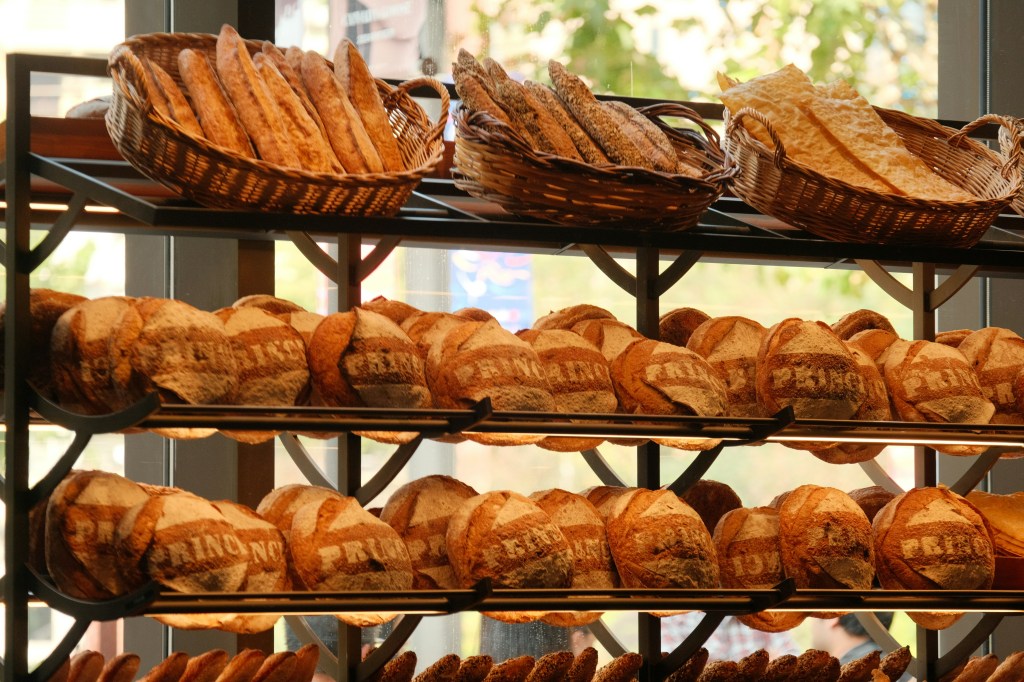
Germany is famous for its variety of baked goods. Fresh bread, rolls, and sweet pastries are an important part of everyday life.
- Brot: Germany offers over 300 different types of bread. Rye bread and wholegrain bread are very popular and can be found in almost every bakery.
- Brezel: A salty lye pastry with a chewy inside and a crisp outside. Very popular in southern Germany, especially as a snack.
- Berliner: A sweet, deep-fried pastry filled with jam or custard, traditionally eaten during carnival season or New Year’s Eve.
General Baked Goods:
Bakeries are everywhere in Germany and offer a wide selection of savory and sweet baked products. Here are some of the most typical ones:
- Bread: Rye bread, wholegrain bread, mixed wheat bread
- Bread Rolls: Schrippen (Berlin style), Semmeln (Bavarian style), Laugenbrötchen (pretzel rolls)
- Pretzel/Lye Pastries: Classic Brezel, Laugenstangen (pretzel sticks)
- Sweet Pastries: Streuselkuchen (crumb cake), Berliner (jam-filled doughnut), Bienenstich (honey almond cake with cream filling)
2. Main Dishes with Meat
Must Try:
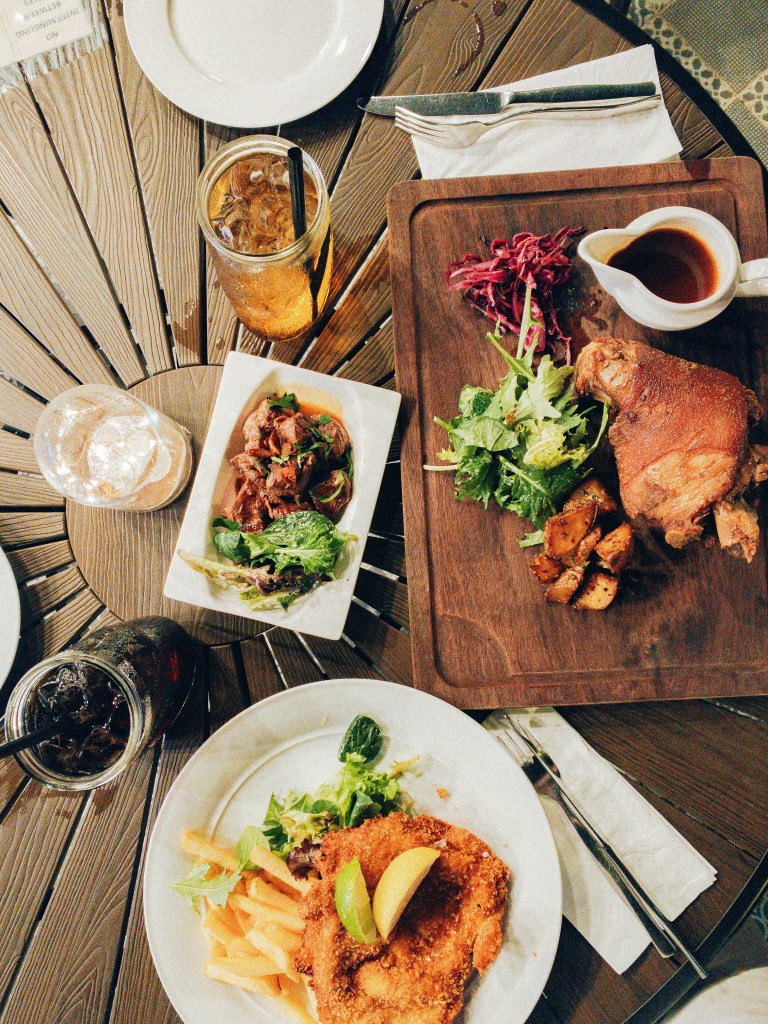
If you want to try some of the most traditional German meat dishes, start with these classics:
- Sauerbraten: A marinated pot roast, usually served with dumplings and red cabbage.
- Schweinshaxe: A crispy roasted pork knuckle, especially popular in Bavaria.
- Rinderrouladen: Beef rolls filled with mustard, onions, pickles, and bacon, slowly cooked in gravy.
- Currywurst: A sliced sausage covered with ketchup and curry powder, a famous street food dish from Berlin.
General Main Dishes:
German cuisine includes many meat-based dishes. Popular meats are pork, beef, and poultry. Most meat dishes are served with potatoes, dumplings, or seasonal vegetables.
- Pork: Sauerbraten, Schweinebraten, Schweinshaxe
- Beef: Rinderrouladen, Gulasch
- Chicken: Hühnersuppe (home-cooked dish), Hühnerfrikassee (home-cooked dish), Grillhähnchen
- Sausages: Bratwurst, Currywurst
- Duck: Weihnachtsente (Christmas time), Entenbraten
3. Main Dishes without Meat
Must Try:
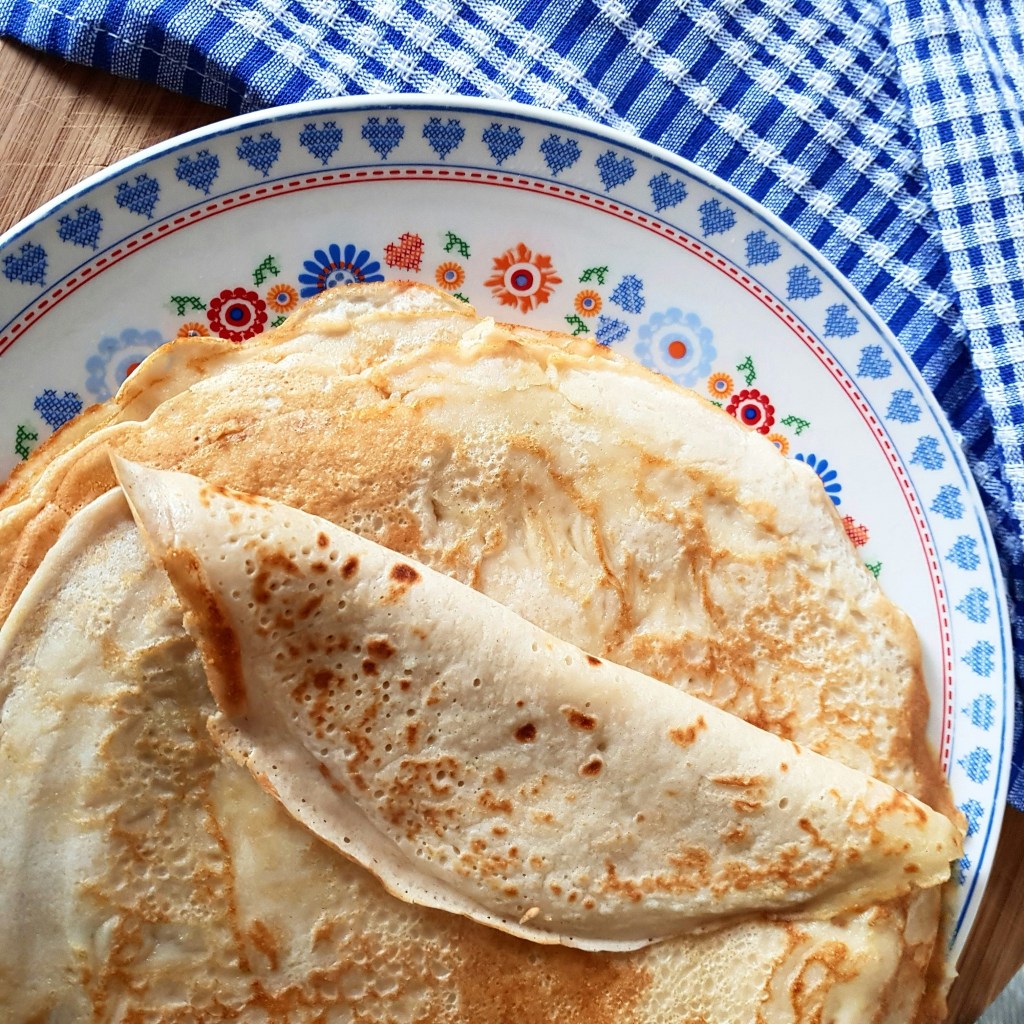
Germany also offers many delicious traditional dishes without meat. These meals often focus on potatoes, flour-based dishes, or seasonal vegetables.
- Kartoffelpuffer: Crispy potato pancakes, usually served with apple sauce. A popular snack or light meal.
- Käsespätzle: Homemade egg noodles mixed with melted cheese and topped with fried onions. A typical dish from southern Germany.
- Spargel with Potatoes and Sauce Hollandaise: White asparagus, served with boiled potatoes and a rich buttery sauce. Especially popular during the spring season.
General Main Dishes:
German meatless cuisine is hearty and flavorful. Potato dishes, flour-based meals, and vegetable stews are common throughout the country.
- Potato Dishes: Kartoffelpuffer, Bratkartoffeln/Bauernfrühstück, Salzkartoffeln/Ofenkartoffel
- Flour-Based Dishes: Käsespätzle (regional specialty), Pfannkuchen (German-style pancakes)
- Vegetable Dishes: Gemüseeintopf (vegetable stew), Blumenkohl with Semmelbrösel (cauliflower topped with toasted breadcrumbs)
- Seasonal Dishes: Spargel (white asparagus) with potatoes and Sauce Hollandaise (spring specialty)
4. Seasonal Dishes

Must Try:
In Germany, food often follows the seasons. Some dishes are only available at certain times of the year and are highly anticipated.
- Spargel with Potatoes and Sauce Hollandaise (Spring): White asparagus is a beloved spring specialty, often served with boiled potatoes and buttery sauce.
- Pumpkin Soup (Autumn): A creamy and warming dish made from fresh autumn pumpkins, often enjoyed in the colder months.
- Gänsebraten (Roast Goose) with Red Cabbage and Dumplings (Winter): A festive Christmas dish, especially popular in traditional restaurants.
- Christmas Pastries (Winter): Traditional treats like Lebkuchen, Stollen, and Spekulatius are enjoyed during the Advent and Christmas seasons.
General Seasonal Dishes:
German cuisine celebrates seasonal ingredients and traditions throughout the year. Here is a quick overview of typical seasonal foods:
- Spring: Asparagus Dishes, Bärlauch (wild garlic) Dishes
- Summer: Potato Salad, Cucumber Salad, Grilled Meat and Sausages
- Autumn: Pumpkin Dishes, Game Dishes (such as venison and wild boar)
- Winter: Christmas Dishes (Gänsebraten, Entenbraten with Red Cabbage and Dumplings), Winter Vegetables (Grünkohl), Christmas Pastries (Lebkuchen, Stollen, Spekulatius, Mutzen, Glühwein)
5. Regional Dishes
Must Try:
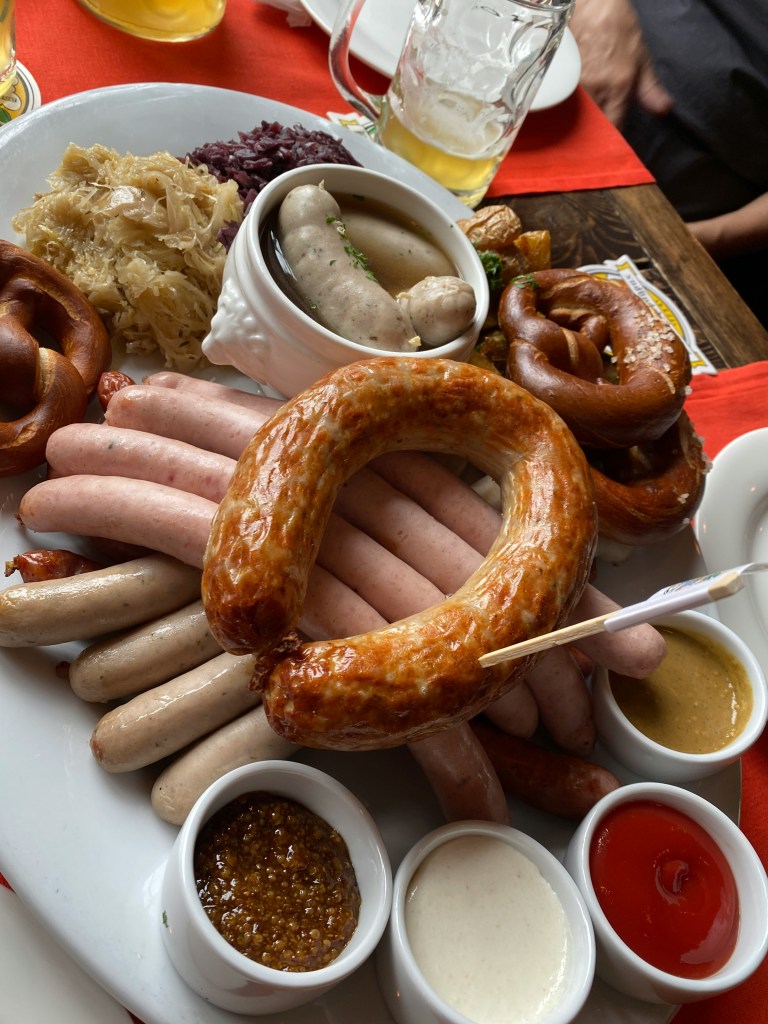
Each region of Germany has its own culinary specialties. Trying local dishes is a great way to explore German culture!
- Labskaus (North): A hearty dish made from corned beef, potatoes, and beetroot, traditionally eaten by sailors. Usually served with a fried egg and pickled herring. **contains strong, traditional flavors
- Weißwurst (South): A mild veal sausage, traditionally eaten in the morning with sweet mustard and pretzels, especially in Bavaria.
- Schwarzwälder Kirschtorte (South): A famous Black Forest cake with chocolate sponge, whipped cream, cherries, and cherry schnapps.
- Döppekooche (West): A baked potato casserole with bacon, traditionally eaten in autumn in the Rhineland.
General Regional Dishes:
Germany’s regions offer a wide variety of local dishes, each with their own traditions and flavors.
- Northern Germany: Labskaus, Fish dishes (Matjes, Bismarckhering, Räucherfisch), Franzbrötchen (sweet pastry with cinnamon, typical in Hamburg)
- Southern Germany: Weißwurst, Schweinshaxe, Käsespätzle, Schwarzwälder Kirschtorte, Baumkuchen, Frankfurter Kranz, Maultaschen
- Eastern Germany: Sauerbraten, Eierschecke (layered cake with custard), Baumkuchen
- Western Germany: Döppekooche, Neujahrskuchen (thin rolled waffles, traditionally made for New Year’s)
6. Food Intolerances and Alternatives
Many people from Southeast Asia are not used to consuming large amounts of gluten or dairy products. In Germany, bread, pastries, and dairy are common parts of daily meals, but there are more and more options for people with intolerances.
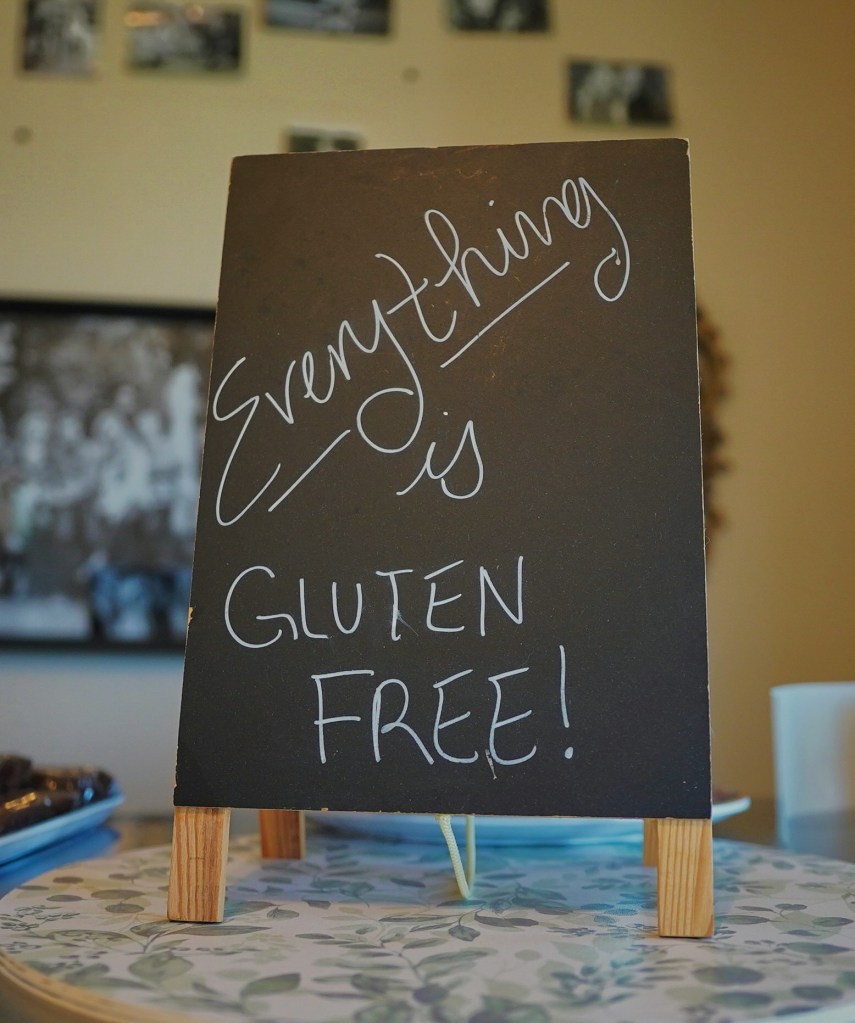
Gluten:
Bread and pastries usually contain wheat and rye.
- Gluten-free bread is available in many supermarkets and some bakeries.
- Gluten-free dishes in restaurants are usually marked with a special symbol or labeled on the menu.
Lactose:
Dairy products like milk, cheese, and cream are very common in German food.
- Lactose-free milk and lactose-free dairy products are widely available in supermarkets.
- Many cafés offer plant-based milk alternatives such as soy milk, oat milk, or almond milk.
Tips:
- Always check the menu or ask if a dish is gluten-free or lactose-free.
- In larger cities, it is easier to find specialized bakeries and restaurants offering gluten-free and lactose-free options.
Helpful Words in German for Intolerances:
- Soy milk = Sojamilch
- Oat milk = Hafermilch
- Almond milk = Mandelmilch
- Gluten-free = glutenfrei
- Lactose-free = laktosefrei
I hope this guide helps you enjoy German food more easily!
Feel free to explore, try new dishes, and find your personal favorites during your time in Germany. – Good luck and enjoy your stay!
–Images courtesy of Unsplash.–
 First Steps in Germany